


When it comes to AI vs Human Jobs, the real conversation isn’t happening in news headlines—it’s happening over everyday chats.
Last week I was talking to someone who works in finance, and they mentioned something that stuck with me. A new AI-powered tool finished work in about thirty minutes that normally took them most of the week. They laughed about getting some free time back, but then admitted they weren’t sure whether to be excited or a little worried about what the next few years might look like.
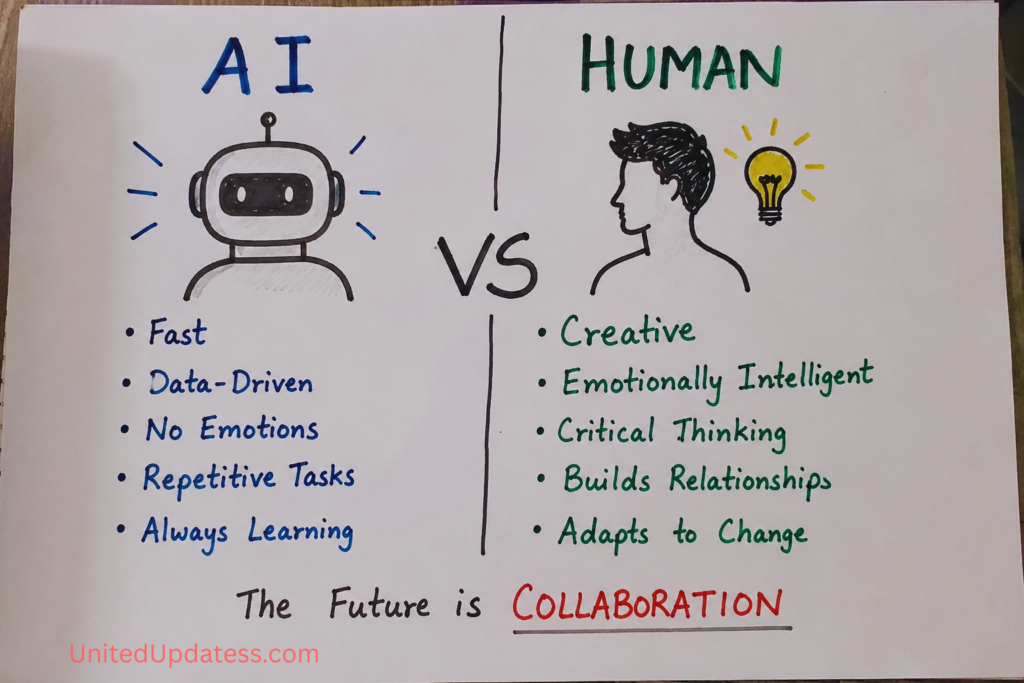
That conversation isn’t unique. A lot of people are quietly asking the same question about AI vs Human Jobs and where they fit in.
Every time you open the news or scroll through social media, there’s another headline about AI writing code, designing graphics, answering customer calls, or helping businesses work faster. It’s easy to wonder whether there will still be enough jobs by 2030.
AI vs Human Jobs: Which roles will change the fastest?
Let’s be realistic about what’s happening. The first tasks being automated are usually the repetitive ones that most people never enjoyed in the first place.
Data entry, sorting through endless spreadsheets, creating standard email replies, and managing routine schedules are all jobs that software can complete in seconds. If a role mostly involves repeating the same steps every day, there’s a good chance those tasks will gradually become automated rather than disappear overnight.
Entry-level roles will probably shift the most in the AI vs Human Jobs dynamic. Instead of spending your first couple of years handling repetitive admin work, you’ll likely spend more time reviewing, improving, and managing the work produced by AI tools.
What machines still can’t replace
Here’s something that’s easy to overlook: AI is incredibly good at recognizing patterns, but it doesn’t actually understand the world the way people do.
It can’t walk into a meeting and notice that a client is uncomfortable before they say a word. It can’t calm an anxious patient, guide a struggling student with genuine empathy, or solve an unexpected problem on a construction site using years of hands-on experience.
That’s why careers that depend on human judgment, emotional intelligence, creativity, skilled trades, healthcare, education, leadership, and relationship-building are likely to remain valuable for a long time.
How to prepare without overthinking it
You don’t need to earn a computer science degree to stay relevant over the next few years. In most cases, you simply need to become comfortable working alongside these new tools instead of avoiding them.
- Get comfortable experimenting with AI tools. You don’t have to master every new platform, but spending a little time learning how they work can save hours on repetitive tasks and free you up for more meaningful work.
- Strengthen your people skills. Clear communication, teamwork, empathy, and good decision-making are becoming even more valuable because they’re difficult to automate.
- Practice critical thinking. Anyone can generate a report with AI. The real skill is knowing when the information makes sense, spotting mistakes, and asking better questions.
Where we’ll be by 2030
By the end of this decade, the conversation around AI vs Human Jobs won’t be about total replacement. Instead, we’ll be living in a world where repetitive tasks are handled by software while people focus more on creativity, judgment, communication, and solving real problems.
Technology has changed the way people work many times before, and each change has created new opportunities alongside new challenges. This shift is unlikely to be any different. The tools will keep improving, but the ability to think clearly, adapt, and build trust with other people will still matter. That’s something no software has truly figured out yet.