

The technology trends of 2026 are finally fixing a big problem: tech was getting way too complicated. Last Sunday, I spent nearly twenty minutes sitting on my living room floor, trying to turn off a smart bulb that had completely stopped listening. It just kept flashing an annoying blue light while every tap on my phone did absolutely nothing. After restarting the app twice and switching the power on and off, I finally laughed and thought, why does something as simple as a light bulb have to be this complicated?
Last Sunday, I spent nearly twenty minutes sitting on my living room floor, trying to turn off a smart bulb that had completely stopped listening. It just kept flashing an annoying blue light while every tap on my phone did absolutely nothing. After restarting the app twice and switching the power on and off, I finally laughed and thought, why does something as simple as a light bulb have to be this complicated?
That little moment made me realize something.
For years, technology has promised to make life easier, but sometimes it has done the exact opposite. The good news is that the technology trends of 2026 seem to be moving in a much better direction. Instead of adding more flashy features, companies are finally paying attention to the things people actually care about—saving time, reducing frustration, and making devices easier to live with.
Smart Assistants Are Becoming More Helpful
One of the most talked-about technology trends of 2026 is how AI assistants are evolving. A few years ago, asking a voice assistant to complete more than one task usually ended with, “Sorry, I didn’t understand that.”
Now they’re finally getting smarter.
Imagine opening your refrigerator and taking a quick photo. Instead of simply identifying what’s inside, an AI assistant can notice that your vegetables are about to expire, suggest a few dinner ideas, and add the missing ingredients to your grocery list without you having to search for each item.
That’s a small example, but it saves time. Instead of answering one question at a time, these assistants are starting to handle complete tasks from beginning to end.
Technology That Doesn’t Constantly Ask for Attention
Not long ago, every new gadget seemed to come with another screen, another notification, or another app to install. After a while, it became exhausting.
One of the most practical technology trends of 2026 is the shift toward technology that quietly works in the background.
For example, many newer smart homes don’t require you to open an app every time you want to adjust the lights or temperature. Motion sensors and on-device AI learn your routine and make those changes automatically.
You may not even notice it’s happening—and that’s exactly the point.
Another welcome improvement is privacy. More devices now process information directly on the hardware instead of sending everything to cloud servers. Besides keeping personal data more secure, it also means your devices continue working even when your internet connection isn’t perfect.
Phones Are Solving Everyday Problems
When looking at the major technology trends of 2026, smartphone updates are taking a quieter approach. Whenever people talk about smartphones, the conversation usually focuses on camera specs or processing power.
In reality, most users simply want a phone that lasts all day and keeps them connected when they need it.
That’s where some of the biggest technology trends of 2026 are making a real difference.
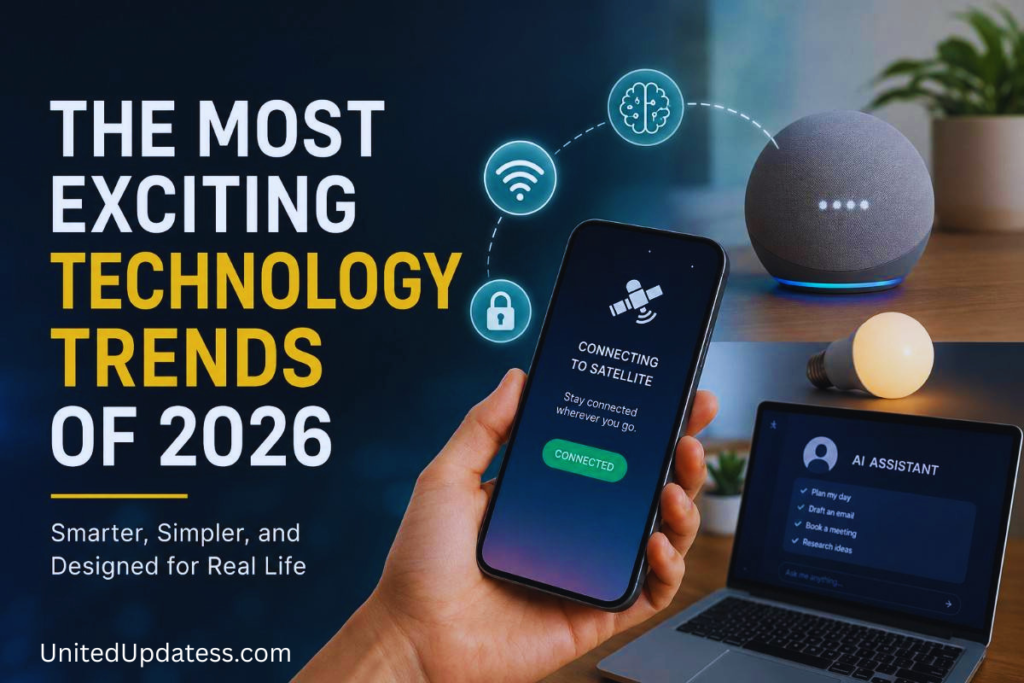
Several smartphones now support satellite messaging for emergencies or areas without mobile coverage. Whether you’re hiking, traveling through remote regions, or simply driving somewhere with poor reception, being able to send a message without a cellular signal could become one of the most useful features available.
Battery technology is improving as well. Many newer devices can comfortably last an entire day under normal use, and battery health isn’t declining as quickly as it did just a few years ago.
These aren’t flashy upgrades, but they’re the kind most people appreciate every single day.
Don’t Feel Pressured to Upgrade Everything
Every time new technology arrives, it feels like we’re expected to replace perfectly good devices.
The truth is, most people don’t need to.
If your laptop still handles your daily work without slowing down, there’s no reason to replace it just because a newer version exists. The same goes for phones, smart speakers, or tablets.
Instead of chasing every trend, it makes more sense to identify what’s actually causing frustration in your daily routine. If a new device solves that specific problem, it’s probably worth considering. If not, your money is better spent elsewhere.
Final Thoughts
The best part about the technology trends of 2026 isn’t that devices are becoming more advanced. It’s that many companies finally seem to understand something people have been saying for years.
Good technology shouldn’t constantly demand your attention.
It should quietly handle the boring tasks, solve small everyday problems, and then get out of the way.
If this direction continues, the next few years may not be remembered for the flashiest gadgets—but for technology that finally started feeling genuinely useful.