


Deciding between renting vs buying a home usually comes down to hidden numbers that nobody calculates until it’s too late. A few months ago, a close friend invited me over to celebrate buying his first house.He was thrilled. He kept showing off the backyard, the natural light in the living room, and the fact that his monthly mortgage payment was only about $150 higher than what he used to pay in rent. On paper, it looked like a total win.
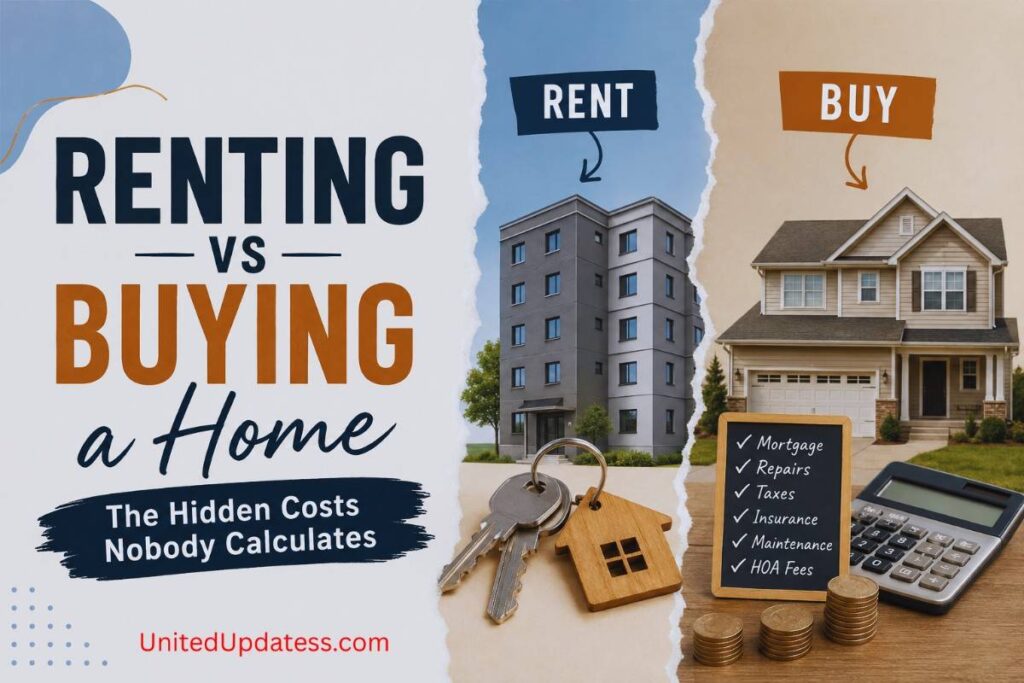
Fast forward four months, and the tone had completely changed. The water heater died, the HVAC system started making a noise like a lawnmower choking on gravel, and HOA dues jumped up without warning. Suddenly, that $150 difference felt more like $1,200 a month in surprise expenses.
When people start weighing renting vs buying a home, almost everybody falls into the exact same trap. We compare rent to a mortgage payment, call it a day, and move on. But that simple side-by-side comparison misses half the picture.
The Hidden Costs in Renting vs Buying a Home Most Buyers Miss
When you buy a house, your mortgage payment is the absolute minimum you will pay each month. When you rent, your monthly rent is often the maximum you will pay. That single distinction changes the whole equation when comparing renting vs buying a home.
Houses wear down constantly, and setting aside money for repairs isn’t optional unless you want bigger problems later. On a $350,000 house, saving just one or two percent for annual maintenance means pulling thousands of dollars out of your pocket every single year just to keep things working.
Your mortgage interest rate might be fixed, but your local property taxes definitely aren’t. As local assessments go up, your monthly payment can rise right along with them. Then there’s the money tied up in your down payment. Putting $60,000 into a property means that cash isn’t available for other investments that could grow over time.
One thing many people overlook is flexibility. Rent gets labeled as “throwing money away,” but paying for free maintenance, mobility, and fewer responsibilities isn’t necessarily a bad deal. Sometimes you’re paying for peace of mind.
The Expenses That Slowly Add Up
It’s not always the dramatic repairs that hurt your budget. In many cases, it’s the smaller expenses that quietly pile up year after year.
Think about the equipment homeowners end up buying. Lawnmowers, ladders, garden tools, pressure washers, replacement filters, and endless trips to the hardware store all cost money. None of these expenses show up when people compare a mortgage payment to rent in a standard renting vs buying a home debate.
Homeowners insurance is another item that often gets overlooked. Depending on the property and location, it can add a noticeable amount to your yearly costs.
Then there’s the value of your free time.
If a kitchen sink starts leaking in a rental, you usually send a maintenance request and move on with your day. If you own the place, that same leak can turn into hours spent troubleshooting, shopping for parts, and watching repair videos online.
Some people genuinely enjoy that responsibility. Others discover they don’t.
Renting Isn’t Perfect Either
To be fair, renting comes with its own set of hidden costs.
If your landlord decides to sell the property or significantly increase the rent, you may be forced to move sooner than expected. Security deposits, moving trucks, utility transfers, and professional movers can quickly turn relocation into an expensive process.
Homeownership also offers something rent never does: equity. Even though early mortgage payments are heavily weighted toward interest, a portion still goes toward building ownership in an asset over time.
Renters also have less control over their living space. Want to remodel a room, replace old appliances, or make major upgrades? In most cases, the final decision belongs to the property owner.
Those limitations may not show up on a spreadsheet, but they still affect day-to-day life when analyzing renting vs buying a home.
What Makes Sense for You?
This is where generic advice usually falls apart.
If you’re not confident you’ll stay in the same area for at least five to seven years, buying often becomes harder to justify. Closing costs, moving expenses, and real estate commissions can erase potential gains surprisingly fast.
It’s also worth asking a simple question: would buying a home leave your savings account nearly empty?
If the answer is yes, you may want to wait. Unexpected repairs have a habit of showing up at the worst possible time.
At the end of the day, the decision regarding renting vs buying a home depends less on headlines about interest rates and more on your personal situation. Some people love gardening, home projects, and putting down roots. Others value flexibility, travel, and weekends free from maintenance responsibilities.
Neither choice is automatically right or wrong.
My friend still loves his house. He isn’t thinking about selling it anytime soon. But now he laughs whenever someone says, “My mortgage is cheaper than rent.”
After paying unexpected HOA increases, replacing a water heater, and dealing with HVAC repairs, he learned something many first-time buyers eventually discover: the mortgage payment is only one piece of the story.
Before making a decision, take an honest look at your finances, your future plans, and the lifestyle you actually want. Once all the hidden costs are on the table, the choice becomes much easier to make.