


Until a few years ago, inflation was in the headlines of every news channel and newspaper. Today, the situation appears better than before, and reports indicate that the pace of inflation has slowed. But despite this, millions of American families still feel financial pressure every month.
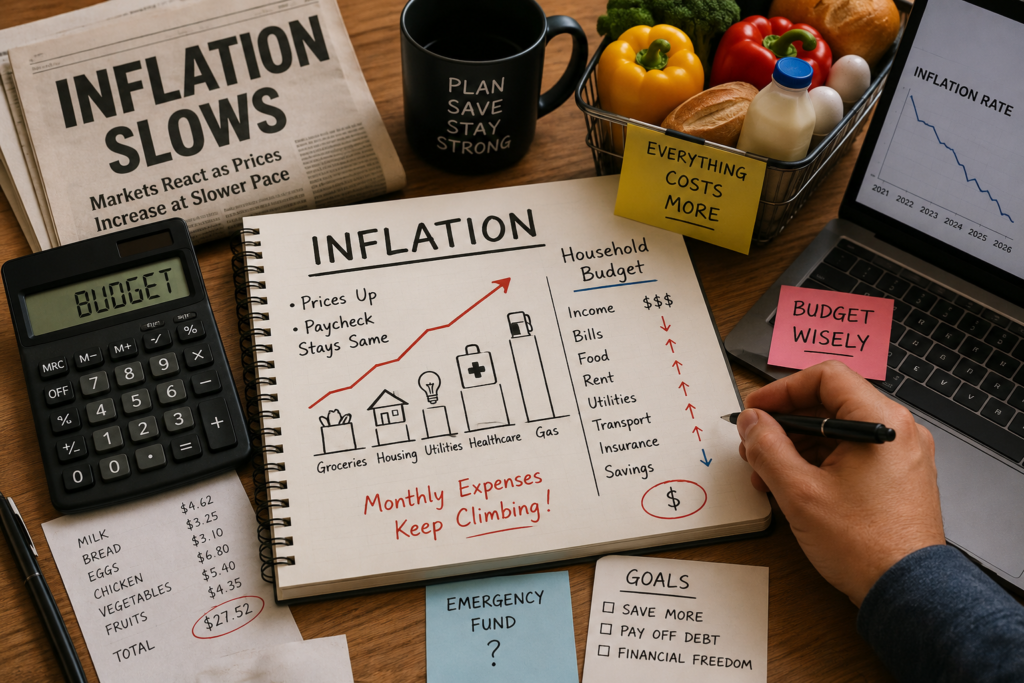
The question is, if inflation is coming under control, why are people still feeling a financial crunch?
The answer lies in The Hidden Cost of Inflation. Although prices may not be rising as rapidly as before, the effects of the inflation that has persisted over the past few years are still evident. Daily essentials are costing more money, making it increasingly difficult for people to save and build financial security.
Inflation has slowed, but prices are still high.
Many people believe that when inflation decreases, prices also fall back. In reality, this is not the case.
When inflation is low, it simply means that prices are rising more slowly than before. Prices that have already risen often remain the same.
For example, if grocery prices have risen significantly over the past few years and only slightly increase in 2026, consumers are still paying more than before.
The same is true for housing, utilities, insurance, healthcare, and transportation.
Household Budgets Are Under Constant Pressure
The biggest impact today is being felt by household budgets.
Families are having to spend significantly more than before on grocery shopping, electricity bills, medical expenses, rent, and insurance premiums. A large portion of monthly income is spent on meeting basic needs.
Many people’s salaries have increased, but the cost of living has risen even faster. The result is that despite earning more, people are unable to feel financially comfortable.
This is why many households are facing constant financial stress.
Creating emergency savings is becoming difficult.
The impact of inflation is not limited to daily expenses. This also affects people’s financial security.
When a large portion of income is spent on bills and daily expenses, it becomes difficult to save money for emergency savings.
Sudden expenses such as a medical emergency, car repair, home maintenance, or job loss can derail many families’ budgets.
Financial experts always recommend creating an emergency fund, but in today’s inflationary environment, this is no longer easy for many people.
The debt burden is also increasing
Another impact of persistent inflation is rising debt.
As pressure on household budgets increases, many consumers turn to credit cards and personal loans to meet their daily expenses.
While this may seem like a solution in the short term, debt and interest payments can exacerbate financial problems in the long run.
Having too much debt can make buying a home, planning for retirement, or saving for children’s education even more difficult.
Why is financial pressure persisting in 2026?
Several factors are still putting pressure on families:
Grocery costs are still high
Prices of food and grocery items remain significantly higher than in recent years.
Housing Expenses Are Steadily Rising
Rent and housing-related expenses continue to take up the largest share of household budgets.
Insurance Premiums Are Getting Expensive
Auto insurance, health insurance, and home insurance costs are steadily increasing.
Healthcare Expenses Are Spiking
Doctors’ fees, medications, and healthcare services have become more expensive than ever.
The Impact of Utility Bills
Electricity, water, internet, and gas bills are also impacting households’ monthly budgets.
These expenses combined are having a profound impact on families’ financial situation.
How Are Families Adapting?
Despite the challenges, many people are trying to better manage their finances.
Some households are reducing unnecessary expenses, focusing on budget planning, and trying to save as much as possible.
Many are also exploring freelance work, side hustles, and part-time opportunities for additional income.
Financial literacy has become more important than ever these days.
What can we expect next?
Inflation may not be as big a headline topic as it once was, but its impact can still be felt in every household.
The Hidden Cost of Inflation isn’t just rising prices. It has a real impact on household budgets, savings, debt, and long-term financial well-being.
Until a better balance is struck between incomes and living costs, many families will continue to feel financial pressure.
Final Thoughthttps://unitedupdatess.com/wp-admin/post.php?post=3021&action=edit