


Life is wonderful, but one thing is true: life can surprise anyone at any time. Sometimes a car breaks down unexpectedly, sometimes a hospital bill arrives, and sometimes a job is lost. No one knows when these financial surprises will strike.
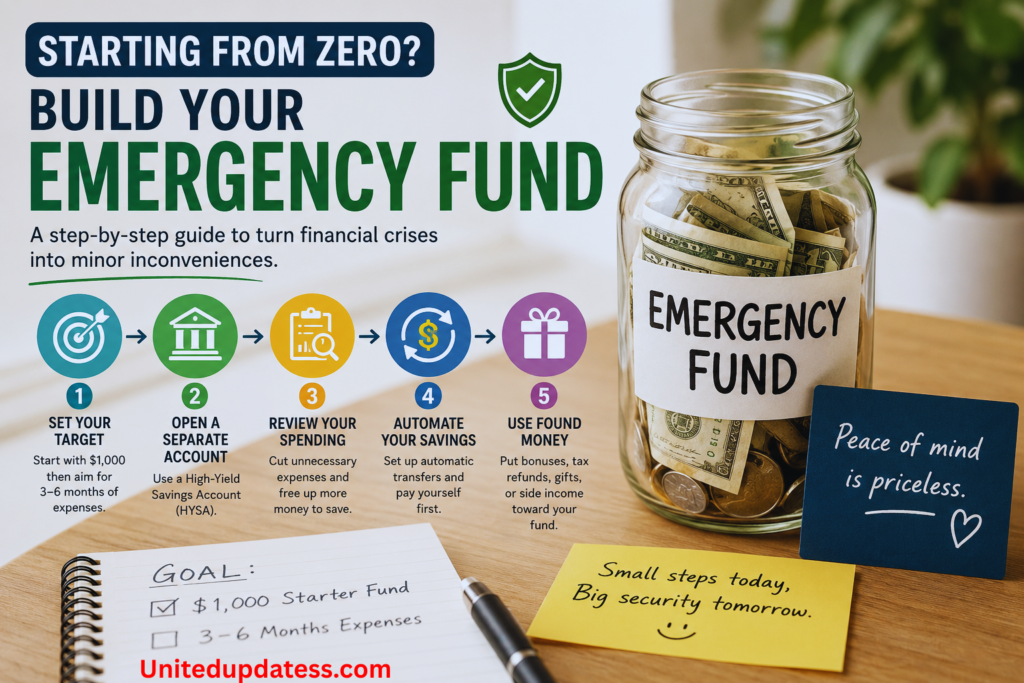
That’s why an emergency fund is so important. Don’t think of it as just a normal savings account, but as a bulwark of your financial security. It keeps you from getting stressed during difficult times and turns a big problem into a small one.
If you’re just starting from scratch and don’t have any savings, don’t worry. Let’s take a step-by-step look at how to build an emergency fund.
Step 1: Set Your Target (Starter Fund and Full Fund)
If you simply think about saving enough money to cover several months’ worth of expenses, it may seem daunting. So, divide your goal into two parts.
Starter Fund ($1,000)
Your first target should be to create an emergency fund of approximately $1,000. This much money can generally cover small emergency expenses, such as a household appliance breaking down or a plumbing problem. This will save you the need to rely on high-interest credit cards.
Full Emergency Fund (3 to 6 Months of Expenses)
Once your Starter Fund is established, gradually build up enough savings to cover your essential expenses for 3 to 6 months. This includes expenses like rent, electricity, water, groceries, and insurance. If you ever lose your job, this fund will serve as a safety net.
Step 2: Open a Separate Account for an Emergency Fund
If your emergency savings are kept in the same account as your daily shopping and spending, saving money will be difficult.
Therefore, it’s better to open a separate savings account for your emergency fund.
This has two major benefits:
Your money will be separate from your daily expenses.
Your savings will earn interest, allowing your money to grow gradually.
When money is kept separate and away from each other, you’re less likely to spend unnecessarily.
Step 3: Review Your Expenses
Before saving money, it’s important to understand where it’s going.
Take some time this weekend and look at your bank statements or card transactions from the last 30 days. You’ll find several expenses that can be temporarily curtailed.
Pay attention to:
Idle Subscriptions
OTT platforms, mobile apps, or gym memberships that you’re not even using.
Convenience Spending
Eating out, food delivery apps, and daily expensive coffee or snacks.
Remember, you don’t have to avoid these things forever. Simply reduce your expenses for a while and create your first emergency fund.
Step 4: Automaticize Savings
The easiest way to save money is to avoid having to think about it.
People often think they’ll save whatever money they have left at the end of the month. But most people end up with nothing left by the end of the month.
Pay Yourself First
Set up an automatic transfer as soon as your salary or income arrives that sends some money directly to your emergency fund account.
Start with a small amount
Even if you save just $15 or $20 each week, that’s fine. The most important thing is consistency. Gradually, you’ll adjust to the remaining money, and your emergency fund will automatically grow.
Step 5: Use Extra or Unexpected Money Properly
If you want to grow your emergency fund quickly, put any unexpected money directly into the emergency fund.
Since this money isn’t part of your regular budget, you won’t feel its shortage.
Such as:
Tax refund
Office bonus
Cash gifts received on a birthday or festival
Money earned by selling old clothes, mobile phones, or electronics
All of these can help you grow an emergency fund quickly.
Consistency is the key
Building an emergency fund isn’t a one-day job. What matters isn’t how much money you save at once, but how consistently and with discipline you save.
When you break your goal down into small steps, separate money from daily expenses, and automate savings, you gradually build a strong emergency fund.
And most importantly, an emergency fund not only provides you with financial security, but also provides you with a peace of mind that is priceless.