


When it comes to long-term investing, the hardest part isn’t picking the right assets—it’s managing your own emotions. A few years ago, I was talking to a friend who couldn’t understand why his investments weren’t growing. He had bought and sold the same stocks so many times that he had lost track of how much he’d spent on fees and taxes. Every market dip made him nervous, and every rally made him chase something new. Looking back, the problem wasn’t the market. It was the lack of patience.
That’s a lesson a lot of people learn the hard way.
We live in a world where everything feels instant. Food arrives in minutes, movies start with one click, and social media is full of people claiming they made thousands of dollars overnight. It’s easy to believe investing should work the same way. The truth is, long-term investing rarely looks exciting from one month to the next. Most of the magic happens quietly, and that’s exactly why so many people overlook it.
Why Long-Term Investing Feels Slow at First
One of the hardest parts of long-term investing is that the early results can feel disappointing. You invest regularly, check your account a few months later, and wonder if it’s even worth the effort.
I’ve had that thought myself.
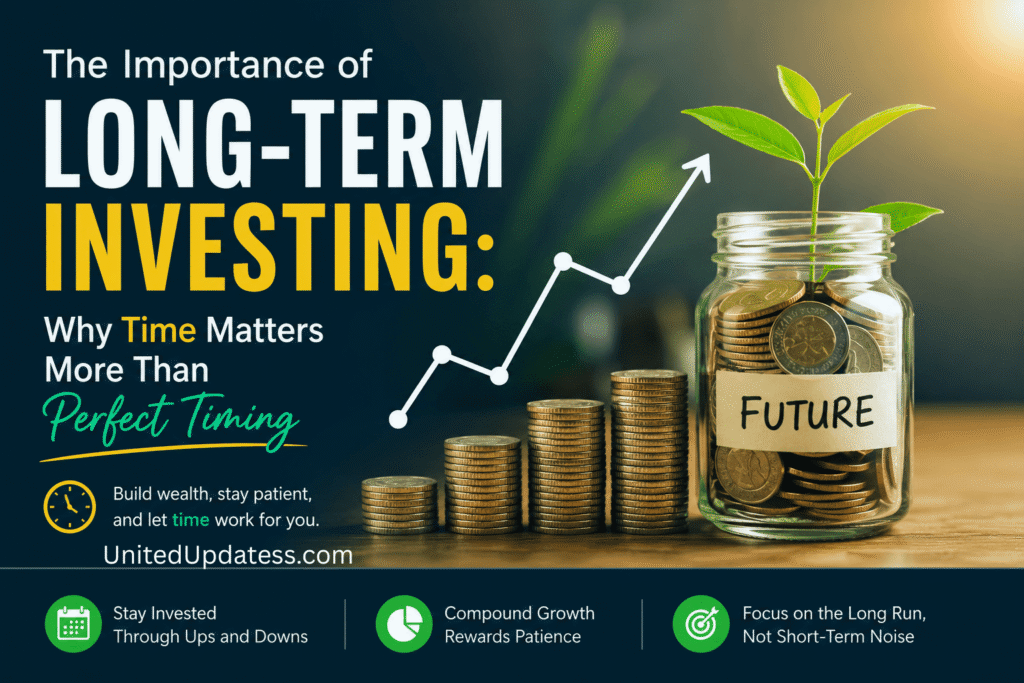
The problem is that we naturally expect progress to be obvious. Investing doesn’t usually work like that. Growth tends to build gradually. The first few years often feel ordinary, but that’s the stage where you’re building the foundation. Once time and compound growth start working together, the difference becomes much easier to notice.
That’s why people who stay invested often end up with better results than those who keep jumping in and out of the market.
Most Investing Mistakes Have Nothing to Do With Picking Stocks
People spend hours trying to find the next winning company, but they don’t spend nearly enough time thinking about their own behavior.
Fear has a funny way of making smart people do expensive things.
A market drop arrives, headlines become negative, and suddenly selling feels like the safest option. Then, just when confidence disappears, the market begins to recover.
It happens more often than most people realize.
That’s one of the biggest reasons long-term investing works. It gives you a reason to ignore the daily noise and focus on where your money could be five, ten, or even twenty years from now instead of next Friday.
Boring Isn’t Always Bad
Nobody posts on social media because they invested the same amount for the twelfth month in a row.
There’s nothing flashy about it.
Still, those simple habits usually beat constantly chasing the latest trend. The people who quietly build wealth often aren’t making brilliant moves every week. They’re following a routine they can stick with.
A few habits make long-term investing much easier:
- Invest consistently, even during uncertain markets.
- Keep an emergency fund so you don’t have to sell investments when life gets expensive.
- Check your portfolio occasionally instead of refreshing it every hour.
- Ignore the pressure to follow every trending investment online.
None of these ideas are complicated, but consistency has a way of outperforming excitement.
Give Your Money Something Most People Don’t
If there’s one thing I’ve learned, it’s this: time is an advantage that too many investors waste.
Nobody can promise what the market will do next month. Even professionals get those predictions wrong. What you can control is how often you invest, how much you save, and whether you stay calm when everyone else is panicking.
That’s where long-term investing quietly separates itself from short-term trading.
You don’t have to be the smartest investor in the room. You don’t need to predict every market move or discover the next big stock before everyone else. You just need a plan that’s realistic enough to follow year after year.
Long-term investing isn’t about getting rich quickly. It’s about giving your money the chance to grow without constantly interrupting the process. That may not sound exciting, but real wealth usually isn’t built through excitement. It’s built through patience, steady decisions, and the willingness to keep going when progress feels slow.
Years from now, you probably won’t remember the market’s worst day or its best day. You’ll remember whether you stayed the course. And more often than not, long-term investing rewards the people who do.