


How to Prepare for a Recession…..
If you want to know how to prepare for a recession without losing your peace of mind, the best approach is to focus on small, practical steps rather than panicking.
I still remember how much uncertainty surrounded the financial crisis of 2008. Even people who rarely followed economic news were suddenly worried about jobs, businesses, and money. Every news channel seemed to have another alarming prediction, and nobody really knew what would happen next.
What stood out most wasn’t the stock market or the economic jargon. It was the uncertainty. People were nervous because they didn’t know how a downturn might affect their lives.
That’s why whenever conversations about a possible recession start showing up again, I think less about headlines and more about preparation. The truth is, most of us can’t control what happens to the economy. What we can control is how ready we are if things become difficult.
If you’re wondering how to prepare for a recession without losing your peace of mind, the best approach is to focus on small, practical steps rather than worst-case scenarios.
Start With an Honest Look at Your Spending if you are eager to Prepare for a Recession
This isn’t the most exciting task, but it’s probably the most important one.
A few years ago, I went through my bank transactions and realized I was spending money on several things I barely used. Small subscriptions, random online purchases, extra takeout meals—it all looked harmless on its own. Added together, it was a different story.
Take an hour this weekend and look at where your money has actually gone during the last few months. Don’t judge yourself. Just be honest.
Try separating expenses into two groups:
Essentials: Housing, groceries, utilities, transportation, insurance, and debt payments.
Non-Essentials: Entertainment subscriptions, impulse purchases, dining out, and other optional spending.
Knowing your minimum monthly expenses gives you a clear target. It turns financial uncertainty into something you can actually plan for. If things get tight later on, you’ll already know which expenses can be reduced without affecting your basic needs.
I also remember talking to people who thought they were doing fine financially until they actually reviewed their spending habits. In many cases, they discovered dozens of small expenses quietly draining money every month.
Build a Safety Net, Even If It’s Small
One piece of advice you hear all the time is to save six months of expenses.
While that’s a great goal, it can feel overwhelming when you’re starting from zero. If you try to jump straight to a massive savings goal, it’s easy to get discouraged and quit before you make meaningful progress.
Instead of focusing on a huge number, focus on the first milestone. Try saving just one month of basic expenses first. Even a small emergency fund can make a big difference when an unexpected expense appears.
I learned this lesson after seeing how quickly a simple emergency can disrupt someone’s finances. A car repair, a medical bill, or a broken appliance doesn’t wait for the economy to improve. These expenses show up whether you’re ready or not.
Having a little cash set aside keeps a minor inconvenience from becoming a major financial headache.
Even a few hundred dollars saved can make a stressful week feel a lot less overwhelming. The amount matters less than building the habit of saving consistently.
How to Prepare for a Recession by Managing High-Interest Debt
If there is one lesson many people learn during difficult economic periods, it’s that debt becomes much harder to manage when income becomes uncertain.
Credit cards can be especially dangerous because high interest keeps the balance growing even when spending stops. It feels like trying to run forward while being pulled backward by a heavy bungee cord.
If possible, put extra money toward paying down your highest-interest balances first.
The smaller your monthly debt payments are, the easier it becomes to handle unexpected setbacks. Even if you can’t clear everything immediately, reducing the balance now can save you a lot of stress later.
If paying off debt quickly isn’t realistic right now, consider contacting your lenders and asking about lower interest rates or alternative payment options. Sometimes a simple phone call can reduce the pressure more than you expect.
Every bit of progress helps. You don’t need to eliminate all debt overnight to improve your financial position.
Focus on What You Bring to the Table
People often talk about protecting investments, but knowing how to prepare for a recession means realizing that your current income is usually your most valuable asset
During economic slowdowns, companies often look for employees who can solve problems, adapt quickly, and handle multiple responsibilities.
You don’t need to become a workaholic, but it helps to be the person who contributes more value than expected.
Learn a new skill related to your field. Become familiar with software or tools your team relies on. Volunteer for projects that help you gain experience beyond your normal responsibilities.
At the same time, keep your resume updated and stay connected with former coworkers, managers, and professional contacts. Building relationships before you need help is always easier than starting from scratch during a job search.
Don’t Let the Headlines Make Every Decision for You
At the end of the day, thinking about how to prepare for a recession isn’t about expecting the worst. It’s about being ready for possibilities.
One thing I remember from past periods of economic uncertainty is how easy it was to get caught up in scary news stories. Every headline seemed urgent. Every prediction sounded dramatic. Yet many of those headlines had very little impact on day-to-day life.
Tough economic periods come and go. Nobody knows exactly when they start or when they end, which is why understanding how to prepare for a recession matters much more than trying to predict it
You don’t need to completely overhaul your finances this weekend. Start with one practical step. Review your spending, save a little extra money, or make an additional debt payment.
Small actions may not feel impressive today, but they can put you in a much stronger position if the economy becomes challenging tomorrow.
The goal isn’t to predict the next recession perfectly. The goal is to make sure you’re better prepared for whatever comes next.
Final Thoughts on How to Prepare for a Recession
Remember, the best time to prepare for a recession is before it becomes a serious concern. Many people wait until financial uncertainty is already affecting their daily lives, but taking action early can make a significant difference.
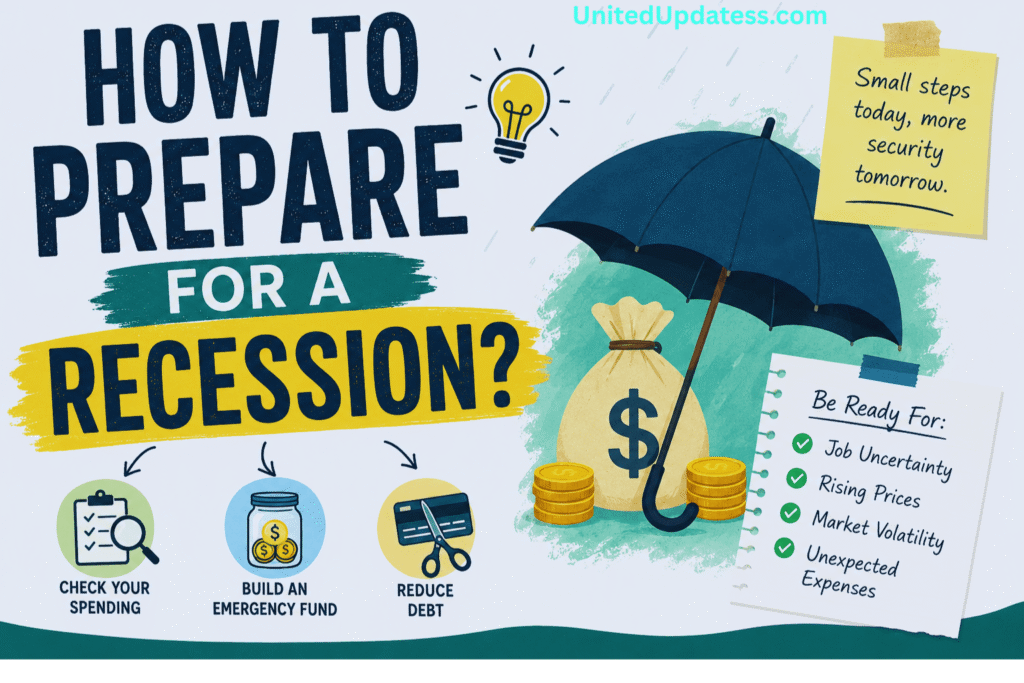
If you’re looking for ways to prepare for a recession, focus on the basics first: manage your spending, build an emergency fund, and reduce unnecessary debt. These simple habits can help create a stronger financial foundation.
No one can predict exactly when the next downturn will arrive, but anyone can prepare for a recession by making smart financial decisions today. The sooner you start, the more confident and secure you’ll feel regardless of what happens in the economy.