


When deciding between an emergency fund vs investing, it usually comes down to one stressful moment. A few years ago, my car’s alternator quit on me during a rainy Tuesday evening. One minute I was driving home, and the next I was standing in a repair shop hearing that it would cost about $750 to get back on the road.
The money wasn’t the biggest problem.
The problem was that almost all of my extra savings were tied up in index funds. The market happened to be down, so selling those investments meant locking in a loss. I remember thinking, “I really wish I’d kept more cash on hand.”
That experience completely changed the way I think about emergency fund vs investing.
Once you finally start saving a little money every month, advice comes from everywhere. One person says to invest every dollar immediately because time in the market matters. Someone else tells you to keep everything safely in the bank.
The truth is, both ideas have value. The challenge is knowing which one deserves your attention first.
Why Saving and Investing Aren’t the Same Thing
An emergency fund isn’t meant to grow into a fortune.
Its job is much simpler than that.
It’s there for the moments you never see coming—a surprise medical bill, a broken washing machine, losing your job, or an expensive car repair. You hope you never need it, but you’re glad it’s there when something goes wrong.
Investing has a different purpose. It’s how you grow your money over the long term. Whether you invest in index funds, ETFs, or real estate, you’re giving your money the opportunity to increase in value over time.
Of course, markets don’t move in a straight line. Some years are great, while others are disappointing. If you suddenly need cash during a market downturn, selling your investments early can leave you with less money than you expected.
That’s why emergency fund vs investing isn’t only about getting the best return. It’s also about giving yourself a little financial breathing room.
Emergency Fund vs Investing: Which One Should Come First?
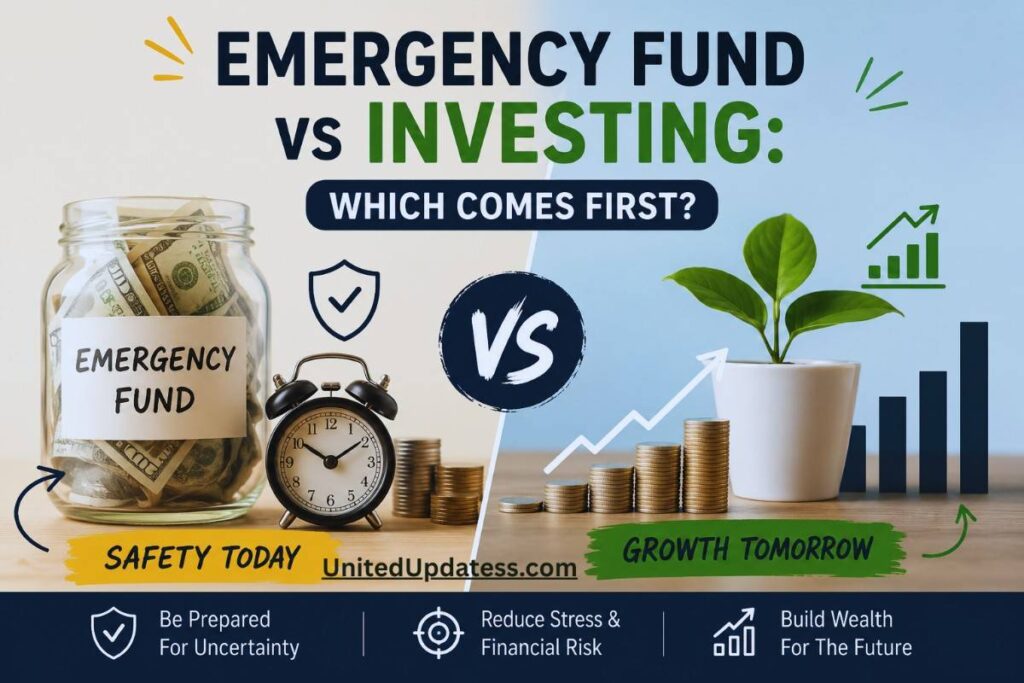
If you’re just getting started, I’d focus on building a small emergency fund before putting most of your extra money into investments.
Think about it this way.
Without any cash set aside, every unexpected expense becomes a problem. You either pull money out of investments at the wrong time or reach for a credit card.
Neither option feels great.
When weighing an emergency fund vs investing, even setting aside $1,000 to $2,000 in a high-yield savings account can make a huge difference. It gives you enough of a cushion to deal with life’s smaller surprises without disrupting your long-term plans.
A Plan That Doesn’t Feel Overwhelming
You’ll often hear that you should save six months of expenses before investing a single dollar.
It’s good advice in theory, but for many people, that’s a huge target. Looking at such a big number can make it feel like you’ll never get there.
A simpler approach is usually easier to stick with.
- Save your first $1,000 to $2,000 as a basic emergency fund.
- If your employer offers a retirement match, contribute enough to receive the full match.
- Keep building your emergency savings until you’ve covered about three months of essential expenses.
- After that, put more of your extra money toward long-term investments.
One step at a time feels far more achievable than trying to do everything at once.
Can You Save and Invest Together?
Yes—and for a lot of people, it’s actually a smart approach.
Imagine you have $250 left after paying your bills each month. You could save $150 and invest the other $100.
Your emergency fund keeps growing, and at the same time your investments start building momentum. Watching progress in both places can be surprisingly motivating.
When people talk about emergency fund vs investing, it doesn’t always have to be one or the other.
One habit that’s helped a lot of people is keeping emergency savings in a separate account from everyday spending. When the money isn’t sitting in your regular checking account, you’re much less likely to dip into it for a weekend trip or an impulse purchase.
Finding the Balance That Works for You
Personal finance isn’t one-size-fits-all.
Someone with a stable job, low monthly expenses, and no dependents may feel comfortable with a smaller emergency fund. On the other hand, someone who’s self-employed or supporting a family will probably sleep better knowing they have several months of expenses saved.
Neither choice is automatically right or wrong.
When it comes to emergency fund vs investing, the goal isn’t to pick one forever. It’s to build enough financial security that unexpected expenses don’t force you to change your long-term plans.
Once that safety net is in place, you can invest with a lot more confidence because you’ll know your future isn’t riding on the next surprise repair bill.