

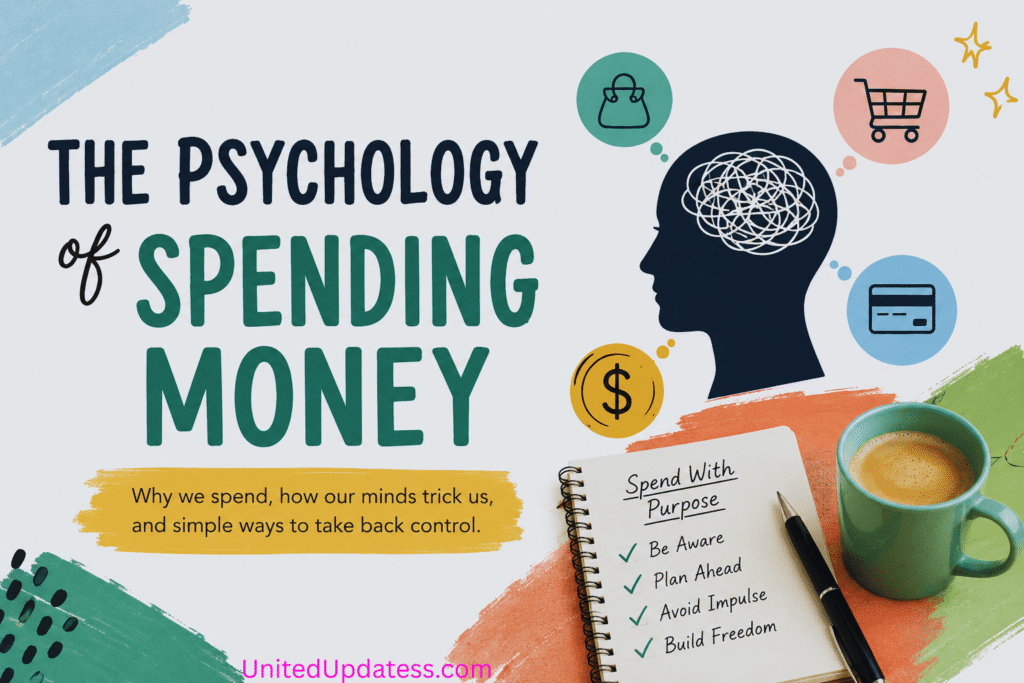
The psychology of spending money is something I started thinking about a few months ago, I opened my banking app and noticed a charge for something I barely remembered buying. It wasn’t expensive, but it made me stop and think. At the time, purchasing it felt completely justified. A few weeks later, I couldn’t even remember why I wanted it.
The funny thing is that most spending decisions don’t feel irrational in the moment. They usually feel reasonable. We tell ourselves it’s a reward for working hard, a limited-time deal, or something we’ll definitely use in the future.
The problem is that money decisions are rarely just about money. They’re often connected to stress, habits, emotions, boredom, excitement, and sometimes even the desire to feel better after a rough day.
That is exactly why understanding the psychology of spending money can be so valuable for anyone trying to build better financial habits
That’s why understanding the psychology of spending money can be surprisingly helpful. Once you recognize why you spend, it becomes much easier to make decisions you won’t regret later.
Real Examples of the Psychology of Spending Money in Daily Life
Handing over cash creates a very different feeling than tapping a phone or credit card. When cash leaves your wallet, you notice it immediately. Digital payments feel smoother, which is convenient, but convenience can also make spending feel less real.
Think about how easy it is to sign up for automatic subscriptions. A monthly streaming app, a cloud storage fee, or a gym membership you rarely visit. Because these charges happen quietly in the background, your brain doesn’t feel the “pain of paying.”
That’s one reason small purchases can quietly add up over time. A coffee here, a subscription there, and a few impulse purchases throughout the month may not seem significant individually. Together, they can have a much bigger impact than expected. You look at your bank balance at the end of the month and wonder where all the money vanished, even though you didn’t buy anything large.
Why Buying Something New Feels Exciting
Most people assume the happiness comes from owning the item itself. In reality, a lot of the excitement happens before the purchase is completed.
Think about the last thing you were really excited to buy. Chances are you spent time researching it, comparing options, reading reviews, and imagining how useful it would be. Sometimes that anticipation is more enjoyable than actually owning the product.
I’ve noticed this in my own life more than once. There have been purchases that felt incredibly important while I was researching them, only to become ordinary parts of life a few days after they arrived.
That doesn’t mean buying things is bad. It just means our brains sometimes exaggerate how much happiness a purchase will create.
Recognizing this pattern is an important part of the psychology of spending money, because anticipation often influences our decisions more than actual need.
When Emotions Start Spending for Us
One pattern many people recognize is emotional spending.
Some people shop when they’re stressed. Others spend when they’re bored. Some celebrate a good day with a purchase and try to fix a bad day with another purchase.
I once added several items to an online shopping cart late at night after a frustrating week. Thankfully, I never completed the purchase. Looking at the cart the next morning, I realized I didn’t actually want most of those things.
The items weren’t solving a problem. They were simply giving me a temporary distraction from how I felt.
Why Digital Payments Feel Different
Handing over cash creates a very different feeling than tapping a phone or credit card.
When cash leaves your wallet, you notice it immediately. Digital payments feel smoother, which is convenient, but convenience can also make spending feel less real.
That’s one reason small purchases can quietly add up over time. A coffee here, a subscription there, and a few impulse purchases throughout the month may not seem significant individually. Together, they can have a much bigger impact than expected.
This is one of the clearest examples of the psychology of spending money in everyday life, where convenience can quietly encourage overspending.
Small Changes That Can Help
One habit that has helped many people is simply waiting before making non-essential purchases.
Instead of buying something immediately, give yourself a day or two to think about it. If you still want it after the excitement fades, then it’s probably a more thoughtful decision.
Another useful trick is asking a simple question:
“Would I still buy this if it weren’t on sale?”
Surprisingly often, the answer is no.
A Healthier Relationship With Money
At the end of the day, the psychology of spending money isn’t about feeling guilty every time you buy something nice. Life is meant to be enjoyed.
The goal is simply to become more aware of the reasons behind your spending habits. When you understand what triggers unnecessary purchases, you gain more control over where your money goes.
The more you understand the psychology of spending money, the easier it becomes to spot costly habits before they affect your finances.
The best financial decisions aren’t always the most complicated ones. Sometimes they’re just the result of slowing down, thinking clearly, and giving yourself a little time before reaching for the buy button.