


Huawei appears to have made a significant leap in smartphone photography once again. According to a recent camera comparison, the Huawei Mate 80 Pro Max outperformed Apple’s iPhone 17 Pro Max when it came to color accuracy and white balance performance.
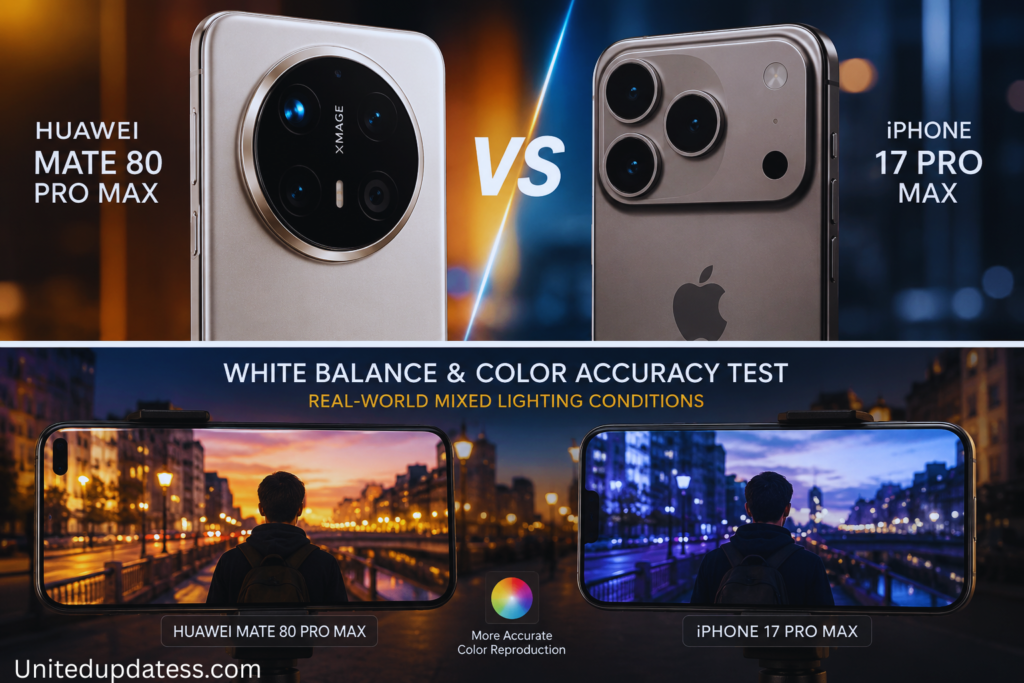
The improvement is largely credited to Huawei’s second-generation multispectral camera sensor, a technology designed to help the camera understand light more precisely and reproduce colors that look closer to what the human eye actually sees.
DXOMARK Puts Both Flagships to the Test
Camera testing experts at DXOMARK recently compared the Huawei Mate 80 Pro Max and the iPhone 17 Pro Max in a controlled environment designed to simulate challenging real-world lighting conditions.
The test included scenes with multiple light sources, something that often causes smartphone cameras to struggle with color reproduction and skin tones.
According to the results, Huawei’s flagship delivered more accurate color rendering and better white balance consistency than Apple’s latest premium device.
Why White Balance Matters More Than Most People Realize
Most people don’t think about white balance when taking photos, but it’s one of the biggest factors that determines whether an image looks natural.
In simple terms, white balance helps a camera understand the color of the surrounding light so that whites appear truly white and other colors look realistic.
For example, when a scene contains a mix of warm indoor lighting and cooler daylight, cameras often have trouble deciding which light source to prioritize. The result can be photos that look slightly too warm, too cool, or simply unnatural.
That’s where advanced white balance technology becomes important.
The Challenge of Mixed Lighting
Modern smartphone cameras perform well when lighting conditions are straightforward. The real challenge begins when multiple light sources with different color temperatures appear in the same scene.
Think about taking a photo inside a restaurant near a window, or capturing a portrait in a room that combines warm decorative lighting with natural daylight.
These situations can confuse camera systems and lead to inaccurate colors or unnatural-looking skin tones.
Maintaining color consistency in these environments is one of the toughest tasks in mobile photography.
How Huawei’s Multispectral Camera Makes a Difference
Unlike traditional camera sensors that primarily rely on RGB (Red, Green, and Blue) information, Huawei’s multispectral technology can analyze a broader range of light data.
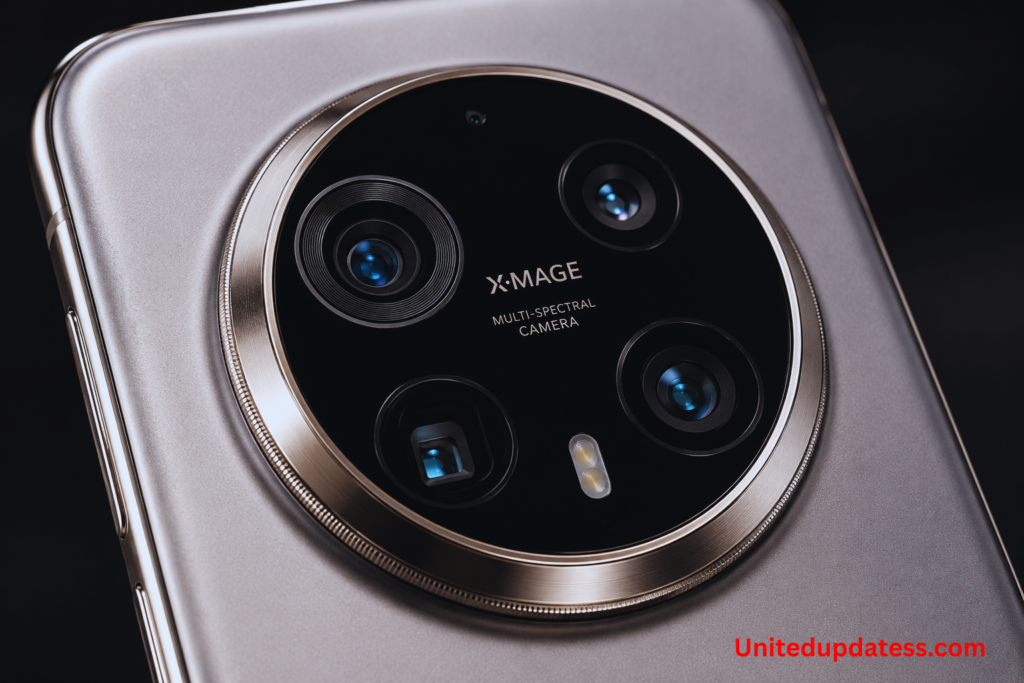
This allows the camera to better understand the environment and make smarter adjustments before the photo is captured.
As a result, users may notice:
- More accurate and true-to-life colors
- Better-looking skin tones
- Improved performance in difficult lighting
- Greater consistency from shot to shot
- More natural-looking photos overall
Why Huawei Came Out Ahead
Based on DXOMARK’s evaluation, Huawei’s multispectral sensor handled complex lighting conditions more effectively, producing more reliable white balance results than the iPhone 17 Pro Max.
That advantage helped the Mate 80 Pro Max deliver images that appeared closer to real life, particularly in scenes where lighting conditions were less predictable.
Does This Mean Huawei Has the Better Camera?
Not necessarily. Smartphone photography involves many different factors, including detail, dynamic range, autofocus, video quality, and low-light performance.
However, when it comes to white balance accuracy and realistic color reproduction, Huawei’s latest flagship appears to have gained a noticeable edge in this particular comparison.
For users who prioritize natural colors and authentic-looking photos, that could be a meaningful advantage.
Final Thoughts
The competition between smartphone camera makers continues to intensify, and Huawei’s latest multispectral technology shows just how much innovation is still happening in mobile photography.
While no single test can determine the overall best camera phone, Huawei’s performance in this comparison highlights an area where the company is pushing the boundaries of color science and image processing.
As smartphone cameras become more advanced, consumers can expect even better photo quality in the years ahead.