


Introduction (The Real Problem Behind Rising Grocery Prices)
In May 2026, shopping at major American supermarkets like Walmart, Kroger, or Aldi no longer feels like a normal everyday task — it feels more like stepping into a horror movie. Millions of American families are currently struggling with what retail experts are calling “sticker shock,” meaning the overwhelming feeling people get when they see the skyrocketing prices of everyday essentials like milk, eggs, bread, and cereal. Although official government data suggests inflation has cooled to around 3%, the reality inside grocery carts tells a very different story.
According to the latest Federal Reserve survey, nearly three-quarters of Americans say they are financially stable overall, yet they remain deeply frustrated and stressed by soaring grocery bills. For the average middle-class family, buying fresh vegetables and household groceries has become a serious budget crisis, leaving many people wondering why prices still haven’t returned to normal. Experts believe Rising Grocery Prices in 2026 may continue throughout the year.
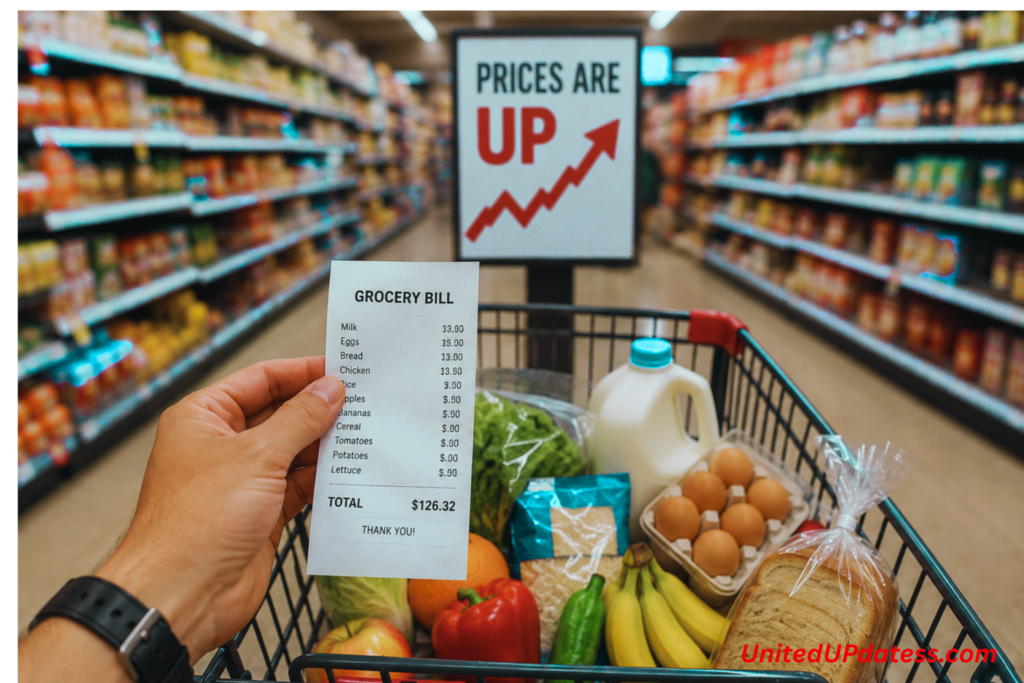
Body Paragraph 1: Corporate Greed and the Real Supply Chain Problem
To truly understand why groceries remain so expensive in 2026, it’s important to look at the role large corporations are playing in the crisis. Major food companies and supermarket chains often blame global supply chain disruptions, wars, and rising fuel costs for higher prices. However, many economists believe another major factor is corporate greed, often referred to as “greedflation.” During the COVID-19 pandemic, large food manufacturers and retailers realized that consumers were willing to pay higher prices out of necessity, and many companies never reduced those profit margins afterward.
In addition, agricultural challenges, extreme weather conditions across several U.S. states, and labor shortages have reduced the supply of essential food products. This means that even if inflation slows down, the cost of producing, transporting, and stocking food remains extremely high — and consumers are ultimately paying the price.
Body Paragraph 2: How Gen Z and Millennials Are Adapting
The ongoing financial pressure has completely changed the shopping habits of younger Americans. Both Generation Z and Millennials are being forced to rethink how they spend money in order to survive rising living costs. Many young shoppers are moving away from expensive organic grocery stores like Whole Foods Market and Trader Joe’s, instead choosing budget-friendly discount stores such as Aldi and Lidl.
Rather than purchasing expensive name-brand products, consumers are increasingly buying generic store brands that offer similar quality at lower prices. At the same time, social media platforms like TikTok and Reddit are filled with trends focused on extreme couponing, creating weekly meal plans on just $50, and maximizing cashback app rewards. Financial stress has become so severe that many young adults are even moving back in with their parents to avoid overwhelming rent and grocery expenses.Rising Grocery Prices in 2026 are forcing families to cut monthly expenses.
Body Paragraph 3: Smart Grocery Hacks to Beat Sticker Shock
If you want to save money and avoid falling into the supermarket pricing trap this month, proper planning is essential before you even grab a shopping cart. First, stop buying pre-cut fruit trays, pre-washed vegetables, and individually packaged snack items. Doing these simple tasks yourself can reduce your grocery spending by as much as 40%. Second, purchase dry groceries, paper products, and meat in bulk from wholesale stores like Costco or Sam’s Club to get better value for your money.
Third, always shop using official store apps from retailers like Walmart or Target Corporation because these apps often contain hidden coupons, cashback offers, and rewards that are not available in stores. Finally, adopt the “Freeze and Save” strategy by purchasing frozen fruits and vegetables. They are often just as nutritious as fresh produce, cost less, and reduce food waste because they last much longer.
Conclusion (Final Thoughts)
Overall, rising grocery prices in 2026 remain a harsh reality that American consumers are likely to face for the foreseeable future. Prices are unlikely to return to pre-pandemic levels anytime soon, making smart budgeting and careful spending more important than ever. By shopping at discount stores, choosing generic brands, and taking advantage of digital coupon apps, families can regain some control over their monthly budgets.
Consumers should not allow inflation to drain their hard-earned income. Small changes in weekly shopping habits today could potentially save thousands of dollars over the course of a year.Many consumers are struggling because of Rising Grocery Prices in 2026.