


Credit score mistakes often happen when you least expect them. A few years ago, I applied for a retail store card just to save $20 on a jacket. I paid it off, tossed the card into a drawer, and completely forgot about it. About a year later, I checked my credit score while getting ready to finance a used car. To my surprise, it had dropped by almost 40 points.
After digging into my credit report, I found the problem. The card had a small annual fee I didn’t even know about. Since I wasn’t using the card anymore, I never noticed the balance. That tiny unpaid amount eventually turned into late payments and, before I realized it, it had been sent to collections.
That experience taught me something important. Most credit score mistakes aren’t caused by a lack of money. They usually happen because people don’t realize how small financial decisions can affect their credit over time.
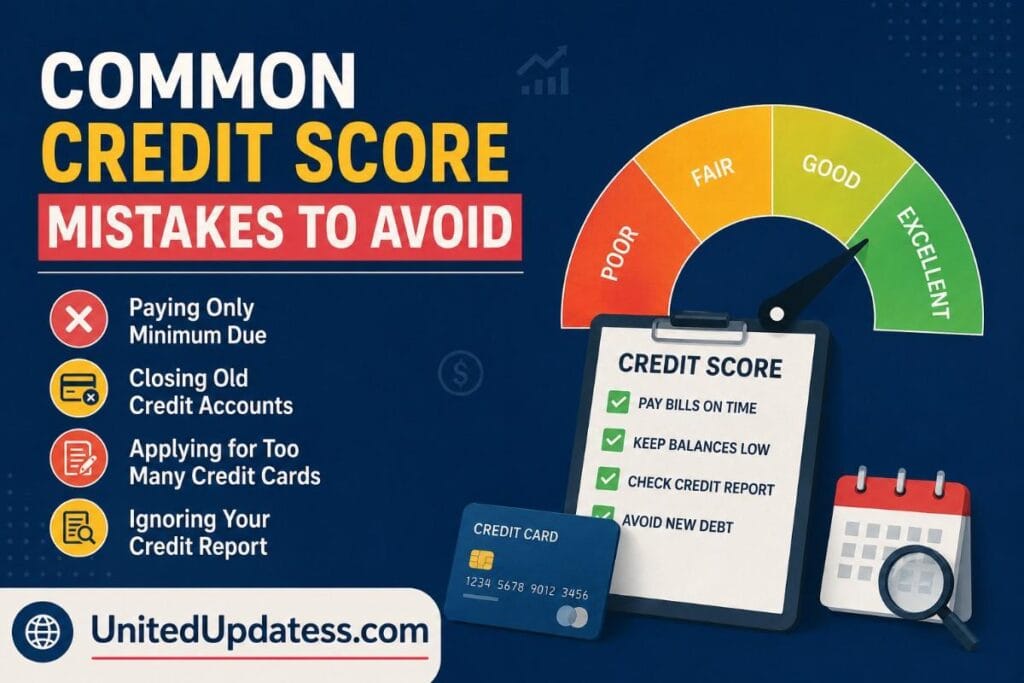
Here are a few credit score mistakes that catch people off guard and how you can avoid them.
1. Thinking the Minimum Payment Is Enough
We’ve all been there. Money is tight, the credit card bill arrives, and paying only the minimum amount feels like the easiest option.
While paying the minimum keeps your account from becoming overdue, it doesn’t solve the bigger problem. The remaining balance stays on your card, and if it’s a large percentage of your available limit, it can hurt your credit score.
This is called your credit utilization ratio. In simple terms, it’s how much of your available credit you’re using. Try to keep it below about 30% whenever possible. You’ll also save yourself from paying unnecessary interest month after month.
2. Closing an Old Credit Card Too Soon
It feels satisfying to pay off an old credit card and finally close the account. I used to think that was the smart thing to do too.
In many cases, though, keeping that account open is actually better for your credit. Older accounts help build a longer credit history, and they also increase your total available credit. Closing them can make your utilization percentage go up, even if your spending stays exactly the same.
If the card doesn’t charge a high annual fee, consider keeping it open. Use it for a small purchase every few months and pay it off right away. It’s a simple habit that can help you avoid unnecessary credit score mistakes.
3. Applying for Too Many Cards at Once
Store discounts and welcome bonuses can be tempting. It’s easy to think, “Why not apply?”
The problem is that every application usually creates a hard inquiry on your credit report. One inquiry isn’t a big deal, but several applications within a short period can make lenders think you’re relying too heavily on credit.
If you’re planning to open a new card, give yourself a little time before applying for another one. Spacing applications out is one of the easiest ways to avoid common credit score mistakes.
4. Never Checking Your Credit Report
A lot of people assume their credit report is always accurate, but mistakes happen more often than you’d expect.
An account that was already paid off might still show a balance. A late payment could be reported incorrectly. Sometimes even personal information gets mixed up.
Checking your credit report once in a while doesn’t take long, and it gives you the chance to catch problems before they affect your score. If you find an error, file a dispute as soon as possible.
Simple Habits That Help
You don’t have to obsess over your credit score every week. A few small habits can make a big difference.
- Turn on automatic payments for at least the minimum amount, so you don’t accidentally miss a due date.
- Keep an eye on your balances instead of waiting for the monthly statement.
- Think carefully before co-signing a loan. If the other person misses payments, your credit can be affected too.
These habits won’t make your score jump overnight, but they’ll help you avoid the credit score mistakes that slowly drag it down.
The Bottom Line
Nobody builds a great credit score by being perfect. Most people learn through experience, and sometimes through a mistake or two.
The good news is that credit score mistakes can usually be fixed with consistent habits. Pay your bills on time, avoid carrying large balances, and check your credit report every now and then. Those simple steps matter far more than chasing the highest possible score.